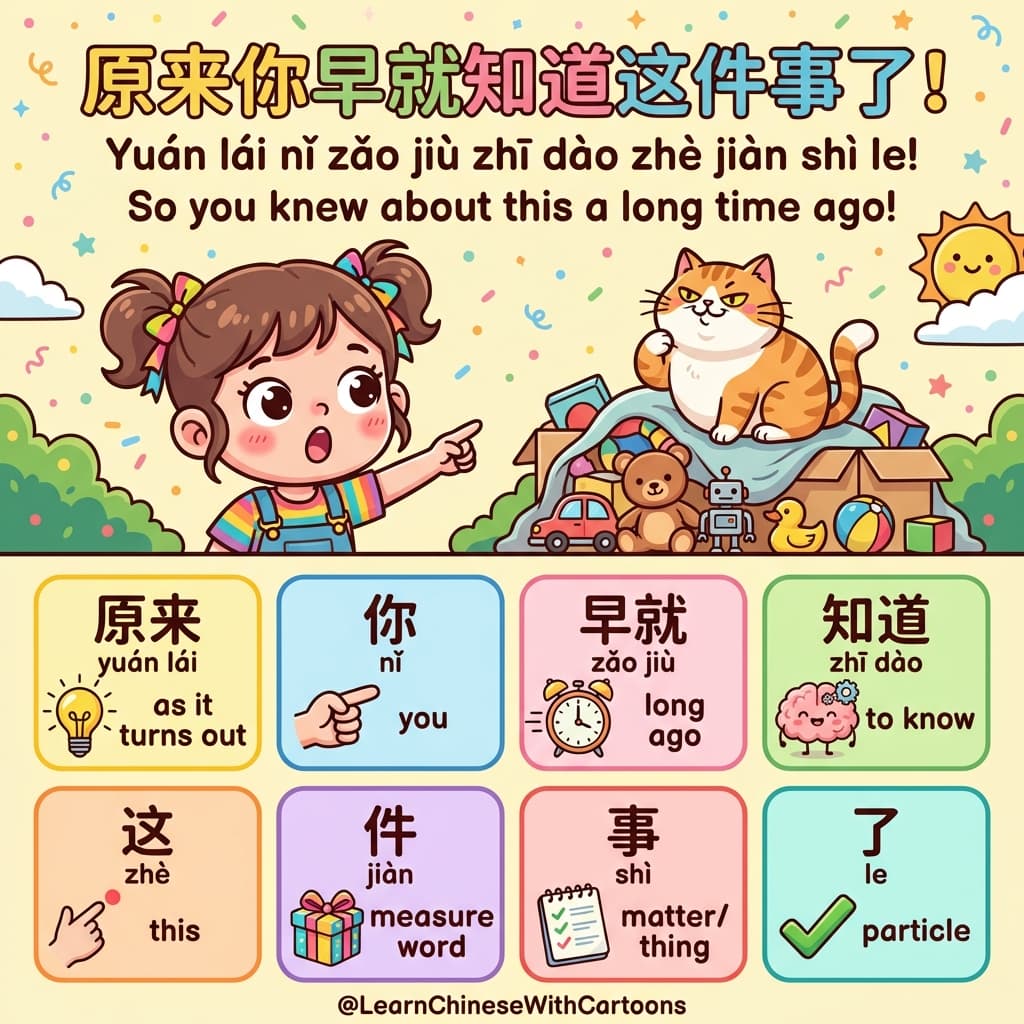
The morning mist in the mountains of Yunnan doesn't just block the view; it feels like a heavy blanket made of secrets. Leo, a freelance photographer from Chicago, had been living in the village of Xizhou for six months, thinking he was just another expat looking for 'inner peace.' He lived in a creaky wooden courtyard house he’d bought for a suspiciously low price from an old man named Lao Chen. Lao Chen was his neighbor, his tea-drinking partner, and the person who taught him how to slow down. But one rainy Tuesday, while Leo was fixing a loose floorboard in his studio, his hammer hit something metallic. It was an old, rusted film canister. When Leo finally managed to develop the film in his makeshift darkroom, his heart stopped. There, in a grainy black-and-white photo from forty years ago, was his own grandfather standing right next to a young, smiling Lao Chen in front of this very house. Leo felt a cold shiver. He grabbed the photo and ran to Lao Chen’s door. 'Lao Chen!' he shouted, holding up the picture. Lao Chen looked at the photo, then at Leo, and gave a slow, knowing nod. Leo gasped, realization hitting him like a tidal wave: '原来你早就知道这件事了!' (Yuán lái nǐ zǎo jiù zhī dào zhè jiàn shì le!) [So you knew about this a long time ago!]
Key Phrase Introduction: '原来你早就知道这件事了!'
In Chinese, there are few feelings as satisfying—or as shocking—as that moment when the pieces of a puzzle finally click into place. Our key phrase today captures that exact 'Aha!' moment.
原来 (Yuán lái) - [Adverb] As it turns out / So it was / Originally. This is the 'spark' of the realization.
你 (Nǐ) - [Pronoun] You.
早就 (Zǎo jiù) - [Adverb phrase] Long ago / Since a long time ago. '早' means early, and '就' adds emphasis.
知道 (Zhī dào) - [Verb] To know.
这件事 (Zhè jiàn shì) - [Noun phrase] This matter / This thing. '件' is the measure word for matters or clothes.
了 (Le) - [Particle] Used here to indicate a change of state or completion.
The Story Continues: The Hidden Library of Xizhou
Grammar Deep Dive: Using '原来' and '早就'
1. The Power of 原来 (Yuán lái):
'原来' is one of the most useful words for storytellers. It functions in two main ways:
A) To indicate a sudden realization (The 'Aha!' moment). For example: 原来是你! (Yuán lái shì nǐ!) - 'So it was you all along!'
B) To describe an original state. For example: 他原来的家在大理。 (Tā yuán lái de jiā zài Dà lǐ.) - 'His original home was in Dali.'
2. The Emphasis of 早就...了 (Zǎo jiù... le):
In Chinese, if you want to say you did something a long time ago, you don't just say '很久以前' (hěn jiǔ yǐ qián). You use '早就...了' to add a tone of 'It happened much earlier than you think.'
Example: 我早就做完了! (Wǒ zǎo jiù zuò wán le!) - 'I finished it a long time ago!' (Implies: Why are you asking me now?)
3. Combining them:
When you combine '原来' and '早就', you are creating a sentence that expresses: 'Now I realize that this thing had already happened or was already known much earlier than I perceived.' It is the ultimate "The plot thickens" phrase.
Cultural Corner: The Concept of 缘分 (Yuánfèn)
In the story, Leo’s arrival in the village feels like a coincidence, but Lao Chen views it as 缘分 (Yuánfèn). This is a beautiful Chinese concept that is often translated as 'fate' or 'destiny,' specifically regarding human relationships. If two people are 'destined' to meet, even across oceans and decades, they have 'Yuánfèn.' Lao Chen believed that Leo’s grandfather’s past and Leo’s future were tied together by an invisible thread. In Chinese culture, many coincidences are not seen as random, but as the unfolding of a pre-destined path. When Leo discovers the truth, he isn't just uncovering a secret; he is recognizing his 缘分 with the village and Lao Chen.
Related Vocabulary
1. 秘密 (mì mì) - Secret
2. 真相 (zhēn xiàng) - Truth
3. 发现 (fā xiàn) - To discover / To find out
4. 故意 (gù yì) - On purpose / Deliberately
5. 瞒着 (mán zhe) - To hide something from someone
6. 缘分 (yuán fèn) - Fate / Destiny (in relationships)
7. 震惊 (zhèn jīng) - Shocked / Astonished
8. 巧合 (qiǎo hé) - Coincidence
9. 爷爷 (yé ye) - Paternal grandfather
10. 邻居 (lín jū) - Neighbor
Dialogue Practice: Confronting the Neighbor
Leo: 老陈,我有话要问你。(Lǎo Chén, wǒ yǒu huà yào wèn nǐ.) [Lao Chen, I have something to ask you.]
Lao Chen: 请说,我听着呢。(Qǐng shuō, wǒ tīng zhe ne.) [Please speak, I’m listening.]
Leo: 你认识我爷爷,对吧?(Nǐ rèn shí wǒ yé ye, duì ba?) [You know my grandfather, right?]
Lao Chen: 是的,他是我的老朋友。(Shì de, tā shì wǒ de lǎo péng yǒu.) [Yes, he was my old friend.]
Leo: 原来你早就知道这件事了!(Yuán lái nǐ zǎo jiù zhī dào zhè jiàn shì le!) [So you knew about this a long time ago!]
Lao Chen: 我一直在等你自己发现。(Wǒ yī zhí zài děng nǐ zì jǐ fā xiàn.) [I have been waiting for you to find out yourself.]
Leo: 你为什么不早点告诉我?(Nǐ wèi shén me bù zǎo diǎn gào sù wǒ?) [Why didn't you tell me earlier?]
Lao Chen: 因为缘分需要时间。(Yīn wèi yuán fèn xū yào shí jiān.) [Because fate takes time.]
Leo: 这不是巧合,对吗?(Zhè bú shì qiǎo hé, duì ma?) [This wasn't a coincidence, was it?]
Lao Chen: 世上没有真正的巧合。(Shì shàng méi yǒu zhēn zhèng de qiǎo hé.) [There are no true coincidences in this world.]
Story Conclusion
Leo spent the rest of the night reading through his grandfather's journals. He learned about the adventures they had in the 1970s, the tea they traded, and the promise Lao Chen made to protect the family legacy. The sense of betrayal Leo initially felt evaporated, replaced by a deep sense of belonging. He looked out the window at the misty mountains and realized that his life in Xizhou wasn't a random choice. He wasn't a stranger here; he was a returning son. He poured two cups of tea, walked back to Lao Chen, and sat down. No more secrets. Just the truth, the tea, and a long-awaited conversation.
Lesson Summary & Quiz
Summary: Today we learned how to express a sudden realization using '原来' and how to emphasize that something happened long ago using '早就...了'. We also explored the cultural weight of 'Yuánfèn' and how it shapes relationships in the Chinese-speaking world.
Quiz:
1. What does '原来' (Yuán lái) mean in the context of a discovery?
a) Never
b) As it turns out / so it was
c) Maybe
2. How do you say 'I already knew' with emphasis?
a) 我知道了 (Wǒ zhī dào le)
b) 我早就知道了 (Wǒ zǎo jiù zhī dào le)
c) 我现在知道 (Wǒ xiàn zài zhī dào)
3. True or False: '这件事' (zhè jiàn shì) can be used to refer to a physical object like a chair.
(Answer: False. '件' is for matters, tasks, or clothing, not furniture.)
4. What is '缘分' (Yuánfèn)?
a) A type of tea
b) A village in Yunnan
c) Destined connection between people
Answers: 1:b, 2:b, 3:False, 4:c. Keep practicing, and soon you'll be uncovering your own Chinese 'Yuánfèn'!